
India's mergers and acquisitions (M&A) market is projected to maintain an annual run-rate of approximately $200 billion, evenly split between domestic, inbound, and outbound transactions, despite global geopolitical turbulence, according to Rajesh Singhi, global co-head, M&A Advisory, Standard Chartered Bank.

"Policy sales will be one of the focus areas for the company because looking at the large insurance gap, large number of people being uncovered. The only right way to go is to increase the number of policies," said Amit Jhingran, MD & CEO, SBI Life Insurance.

Indian companies are increasingly turning to share buybacks as a preferred payout strategy, driven by recent tax framework changes that make them more tax-efficient for non-promoter shareholders and a fall in stock prices.

The Securities and Exchange Board of India (Sebi) has implemented a fast-track mechanism for Alternative Investment Funds (AIFs), allowing scheme launches after 30 days of filing, aiming to reduce timelines and accelerate capital deployment.

Indian equities are experiencing their sharpest rebound in years, with the BSE 500 index rallying 12.1 per cent so far this month, echoing Covid-era recoveries despite ongoing geopolitical uncertainty and earnings risks.

'We are staying away from making forward-looking statements on when we will reach 1 trillion, etc. But growth will be rapid; it's only a matter of time.'

Yield-generating instruments like Infrastructure Investment Trusts (Invits), Real Estate Investment Trusts (Reits), and Non-Convertible Debentures (NCDs) are witnessing a surge in investor interest, contrasting with a notable slowdown in the equity primary market, which saw only one IPO in April.

Travel is now the dominant spending category for India's affluent consumers, who are prioritising experiences and luxury goods over retail buying, according to a new report.

Major Indian banks, including Axis Bank, HDFC Bank, and RBL Bank, have reported a decline in employee headcount in FY26, attributing the reductions to significant investments in technology and automation yielding productivity gains across operations.

JPMorgan has downgraded Indian equities to 'neutral' from 'overweight', citing elevated valuations, rising earnings risks, and limited exposure to next-generation technology like AI. The brokerage believes other emerging markets offer more attractive risk/reward propositions despite India's strong structural growth story.

Global brokerage Bernstein has issued a cautionary note, stating that India risks 'under-delivering on its potential' unless it addresses key policy bottlenecks and structural risks, including employment challenges from AI, limited manufacturing gains, and rising welfare spending.

'It is a tradeoff between convenience and fraud prevention.'
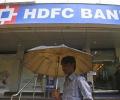
HDFC Bank, India's largest private-sector lender, has revised its FY27 growth trajectory, stepping back from earlier guidance to align with a more measured 12 per cent year-on-year expansion, citing geopolitical uncertainties.

'Mobius made EMs investable and India his most enduring belief.'
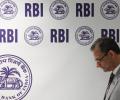
The Reserve Bank of India (RBI) has introduced stricter timelines for banks to process inward cross-border remittances, aiming to reduce delays in crediting funds to beneficiaries by mandating immediate customer intimation and more frequent nostro account reconciliation.

The Reserve Bank of India (RBI) is set to revise its directives for bank boards, aiming to alleviate operational burdens and enable them to concentrate on crucial policy and strategic decision-making, thereby enhancing corporate governance in the Indian banking sector.

TransUnion Cibil CEO Bhavesh Jain highlights the improved retail portfolio quality in January but stresses the need for lenders to continuously engage with borrowers on credit usage and repayment, similar to the approach taken during the Covid-19 pandemic, as the impact of the Iran war on credit quality is still being assessed.

India has emerged as the most impacted market within emerging economies, experiencing $3.7 billion in outflows over the past three weeks, matching the total outflows from the entire emerging market basket, as global equity funds turn negative for the first time since January 2026 due to escalating geopolitical tensions.

The Reserve Bank of India (RBI) has granted approval for UAE-based Emirates NBD (ENBD) PJSC to acquire up to a 74 per cent stake in RBL Bank for $3 billion, marking the largest foreign investment ever in a domestic Indian bank.

Lenders are actively monitoring gold price volatility, prompting them to ask borrowers for additional gold collateral or partial principal repayment when loan-to-value (LTV) thresholds are breached, particularly for loans disbursed in February.
 © 2026 Rediff.com - Advertise with us - Disclaimer - Privacy Policy - Sitemap - Feedback - About us - Terms of use - Grievances